
Om Therapeutics
Landing page redesign and platform UX overhaul for a biotech company using AI and synthetic biology for molecular interaction research.
Om Therapeutics
Product Designer
2024
Marketing · Product Design
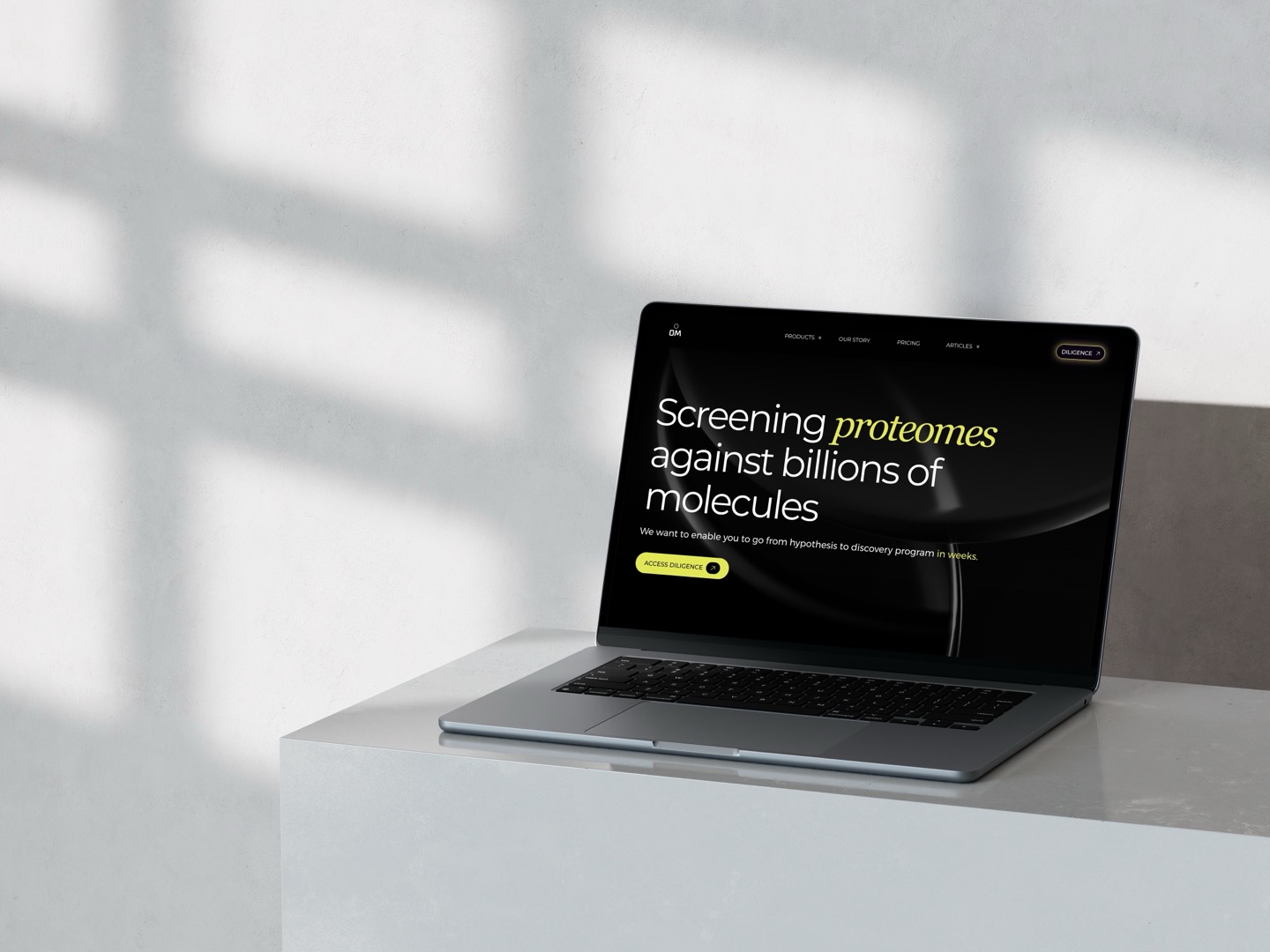
Om Therapeutics uses molecular encoding, synthetic biology, and AI to generate massive datasets for drug discovery. Their technology was cutting-edge, but the digital experience didn’t match. The landing page undersold the product, and the platform itself needed significant UX improvements.
From the landing page redesign to full platform UX, the partnership was amazing. They understood our complex product and translated it into an experience that matched our science.
A brand that needed to match the science
The engagement started with a two-week landing page redesign, then expanded into a full platform UX overhaul. Om Therapeutics needed to project scientific authority to researchers and investors, but the existing design felt like a template. For a company working on cutting-edge molecular interaction research, this was a real business problem.
I worked across both marketing and product design, collaborating closely with the engineering and science teams. As the project grew, I got direct access to the codebase and started making frontend tweaks myself, submitting PRs for the engineering team to review.
Three principles for complex products
We approached Om Therapeutics with a framework designed for complex products: understand the science, collaborate with the team, and simplify the interface.
-
Understanding — Conducted in-depth research to identify the product’s goals, audience needs, and key challenges, ensuring the design reflects the customer’s vision and simplifies complexity.
-
Collaborating — Fostered open communication by involving the science team throughout the process, blending their expertise with design insights for a seamless collaboration.
-
Simplifying — Created intuitive workflows by organizing information logically and emphasizing clarity, delivering a landing page that effectively communicates the product’s value.
Redesigning the landing page
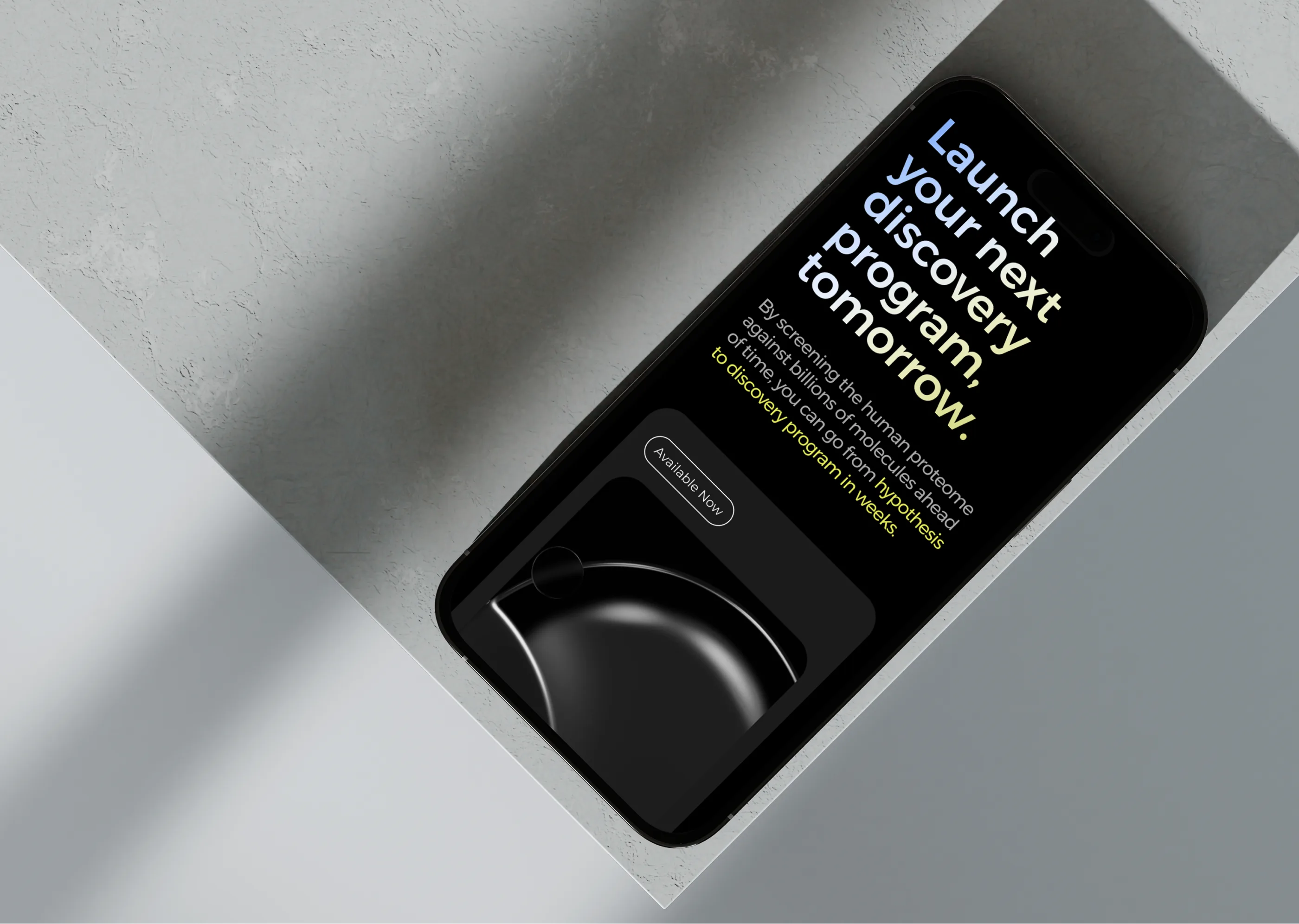
The landing page had a credibility gap: the technology was genuinely sophisticated, but the design felt generic. We moved away from generic biotech imagery toward purposeful data visualizations and clear technical messaging. The result was a page that felt authoritative without being impenetrable.


From kickoff to a fully redesigned landing page
Overhauling the platform UX
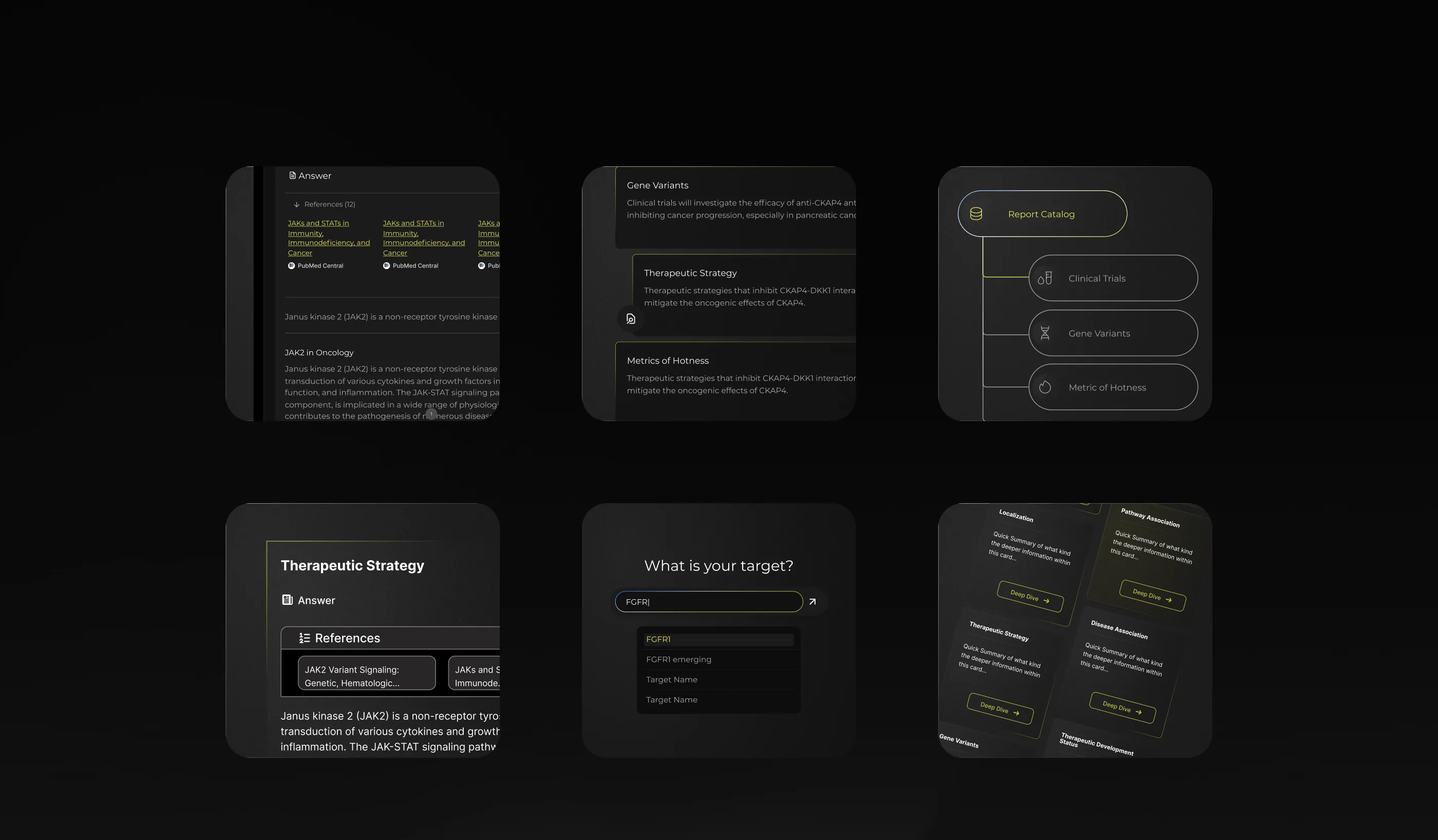
On the platform side, the UI had accumulated complexity as new features were added without a design system. Research scientists needed clear data visualization and intuitive workflows. Complex datasets were restructured into scannable views with progressive disclosure for detail.
I designed gene variant cards, therapeutic strategy views, report catalogs, and target search flows — all while maintaining a dark, data-dense interface that felt native to the scientific workflow.
Frontend implementation
Rather than handing off specs and waiting for QA cycles, I worked directly in the codebase. I made frontend adjustments, submitted pull requests, and iterated with engineering in their environment. This collapsed the feedback loop between design intent and shipped output.
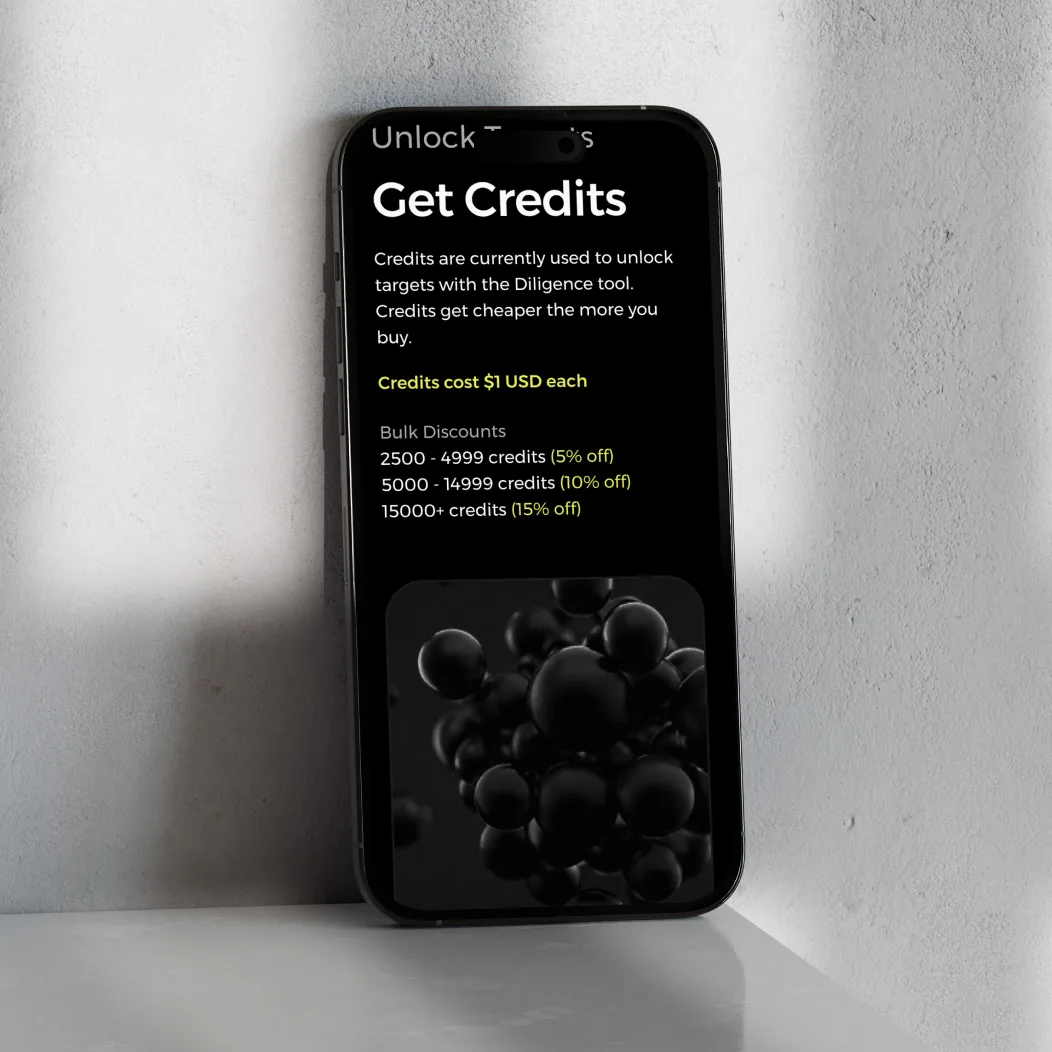

Frontend contributions shipped directly to the codebase
Outcome
15%+ improvement in user satisfaction ratings. Made 100+ direct frontend contributions while delivering a redesigned landing page and platform UX overhaul.
The landing page redesign improved engagement and brand perception immediately. On the platform side, 100+ frontend contributions shipped directly through PRs — with a 15%+ improvement in user satisfaction. The work demonstrated that design quality and scientific rigor can coexist — and that working directly in the codebase collapses the gap between design intent and shipped product.