
Full Harvest
End-to-end product design for a B2B surplus produce marketplace, plus a 200+ component design system that helped the team ship 30+ features in a single year.
Full Harvest
Lead Product Designer
2022-2025
Product Design · Design Systems
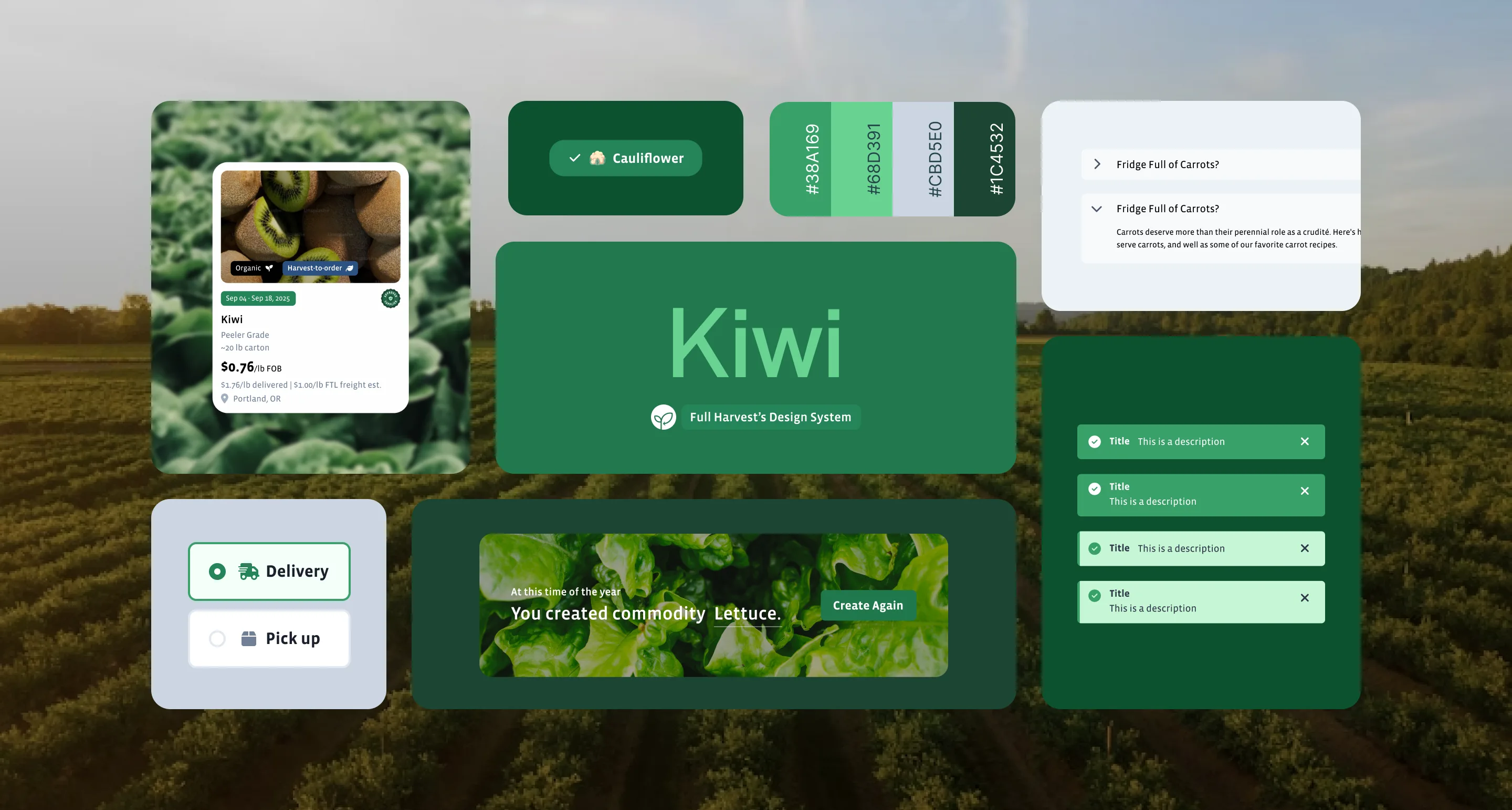
Full Harvest connects surplus produce suppliers with buyers, reducing food waste at scale. I led product design across both sides of the marketplace, the internal sales tools, and the design system that tied it all together.
We worked with Full Harvest to create a design system that would fit within their current framework. By integrating our expertise with their established product, we built a foundation that not only respects the brand but is also primed for future growth.
A product that hadn’t scaled with the business
The food supply chain wastes roughly a third of what it produces. Full Harvest built a B2B marketplace to capture surplus produce that would otherwise be discarded, connecting farms and suppliers with buyers looking for affordable, quality product. The company had traction (24 investors, growing team), but the product hadn’t scaled with the business. Features were built without shared standards, buyer and supplier flows had diverged, and the internal sales team was managing a complex food marketplace with tools that couldn’t keep up.
The challenge: this isn’t a typical e-commerce problem. Produce has expiry windows. Sizing standards vary by crop and region. Pricing fluctuates daily. And most of the industry still buys by phone. Every flow had to account for that complexity without drowning users in it.
Leading design across three product areas
I led design with another designer I managed, working alongside the PM, engineering, and sales teams. Together we prioritized and roadmapped features based on business goals across three product areas: the buyer marketplace, the supplier tools, and the internal sales platform.
Mapping buyer and supplier workflows
We mapped how buyers and suppliers actually operated. Buyers needed a shopping experience adapted to agricultural purchasing: farm-specific pricing, bulk ordering with variable sizing, and produce specs that don’t exist in standard e-commerce. Suppliers needed tools to manage pricing, track expiry dates, handle shipping logistics, and maintain stock across multiple buyers.
The sales team had the most acute pain. They were the connective tissue of the marketplace, managing orders in a complex industry where a single transaction involves produce specifications, delivery windows, quality requirements, and pricing negotiations. Their existing tools couldn’t handle that density of information.
Buyer marketplace
I designed the full shopping experience: browsing, product detail pages, cart, and checkout. The key challenge was translating agricultural purchasing conventions into a digital experience. Farm list pricing, variable unit sizing, and seasonal availability all needed to feel intuitive to buyers who were used to picking up the phone.
We also designed service touchpoints beyond the interface. Email marketing flows kept buyers informed about new inventory and seasonal opportunities, closing the gap between the marketplace and how this industry actually communicates.
Supplier tools
Suppliers needed to manage pricing, produce expiry, shipping, and stock without the workflow feeling like a data entry job. I designed flows that surfaced what mattered most: what’s about to expire, what’s priced competitively, what’s low on stock. The tools had to work for operations teams at farms, not just for people comfortable with SaaS dashboards.
Innovation: counteroffers
We explored a counteroffer system that allowed buyers and suppliers to negotiate price and produce specifications directly within the platform. This back-and-forth discussion flow was new territory for agricultural B2B. It moved negotiation from phone calls into the product, giving both sides a record of the conversation and reducing the sales team’s mediation burden.
Internal sales ERP
The sales team managed the most complex part of the business. I redesigned their internal system to handle order management, client relationships, and the nuances of food commerce: quality requirements, sizing differences, delivery scheduling, and the rapid pace of a perishable goods marketplace. The goal was giving them a tool that matched the complexity of what they actually do, instead of forcing workarounds.
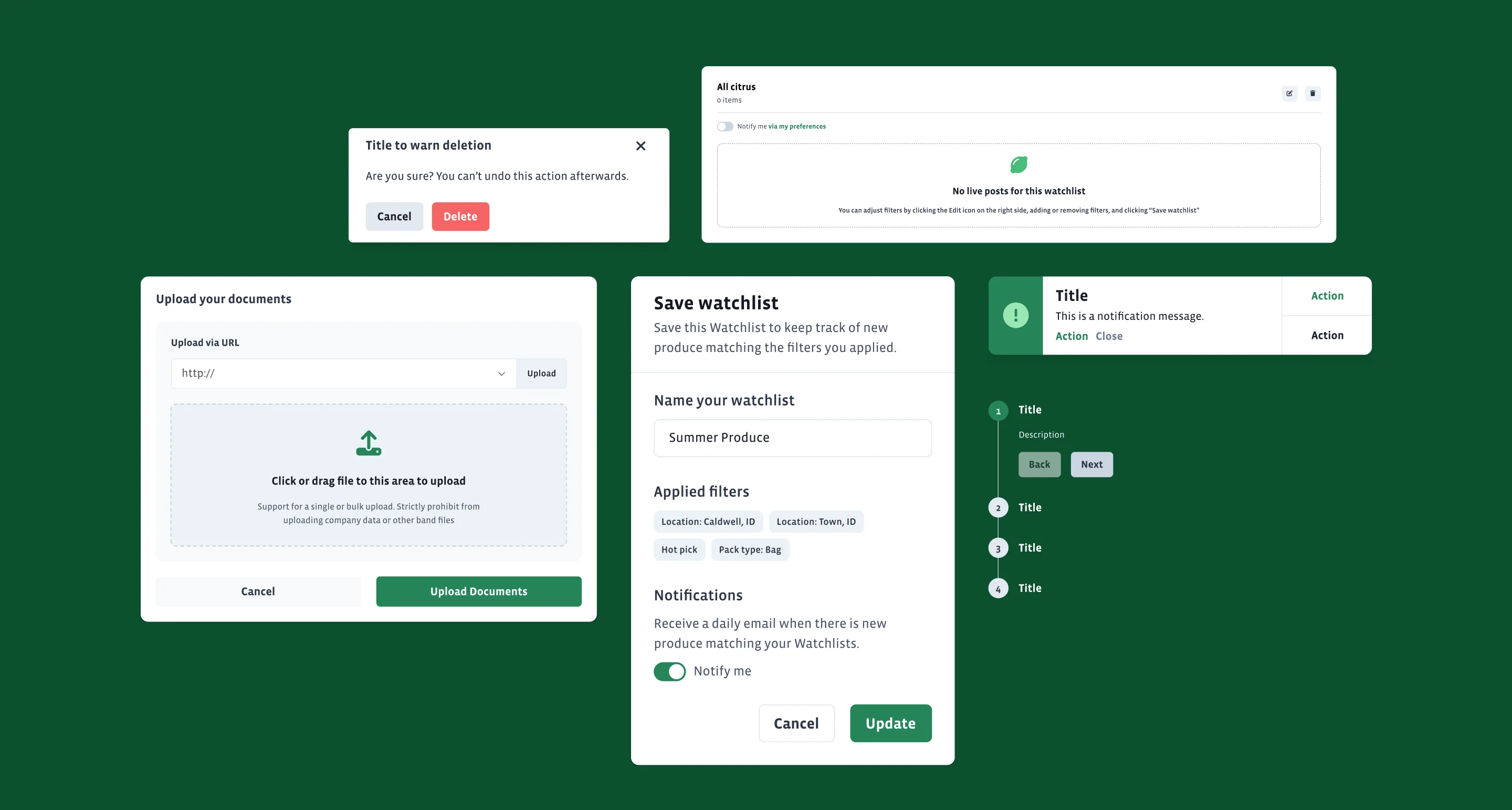
Kiwi: the system behind the system
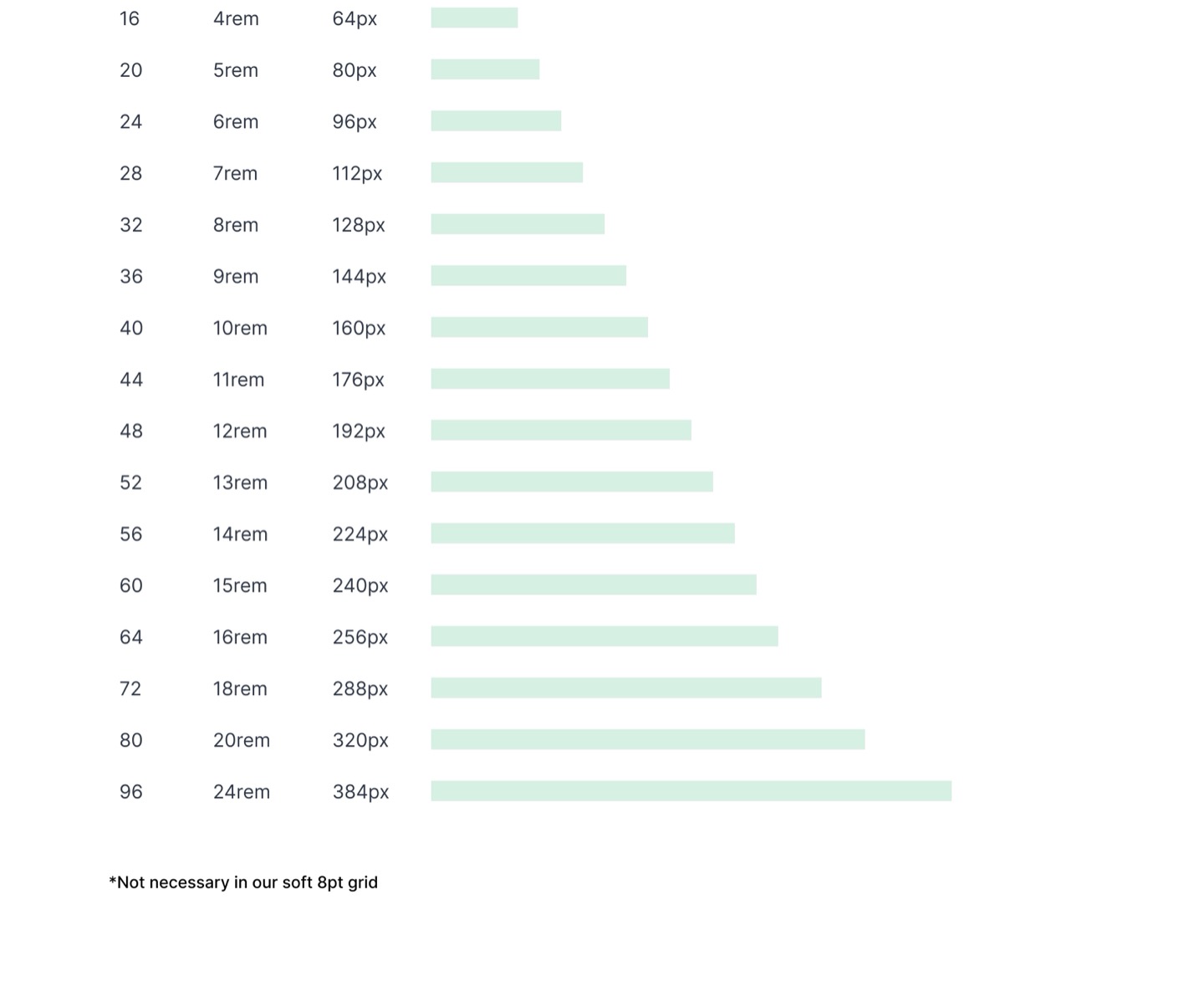
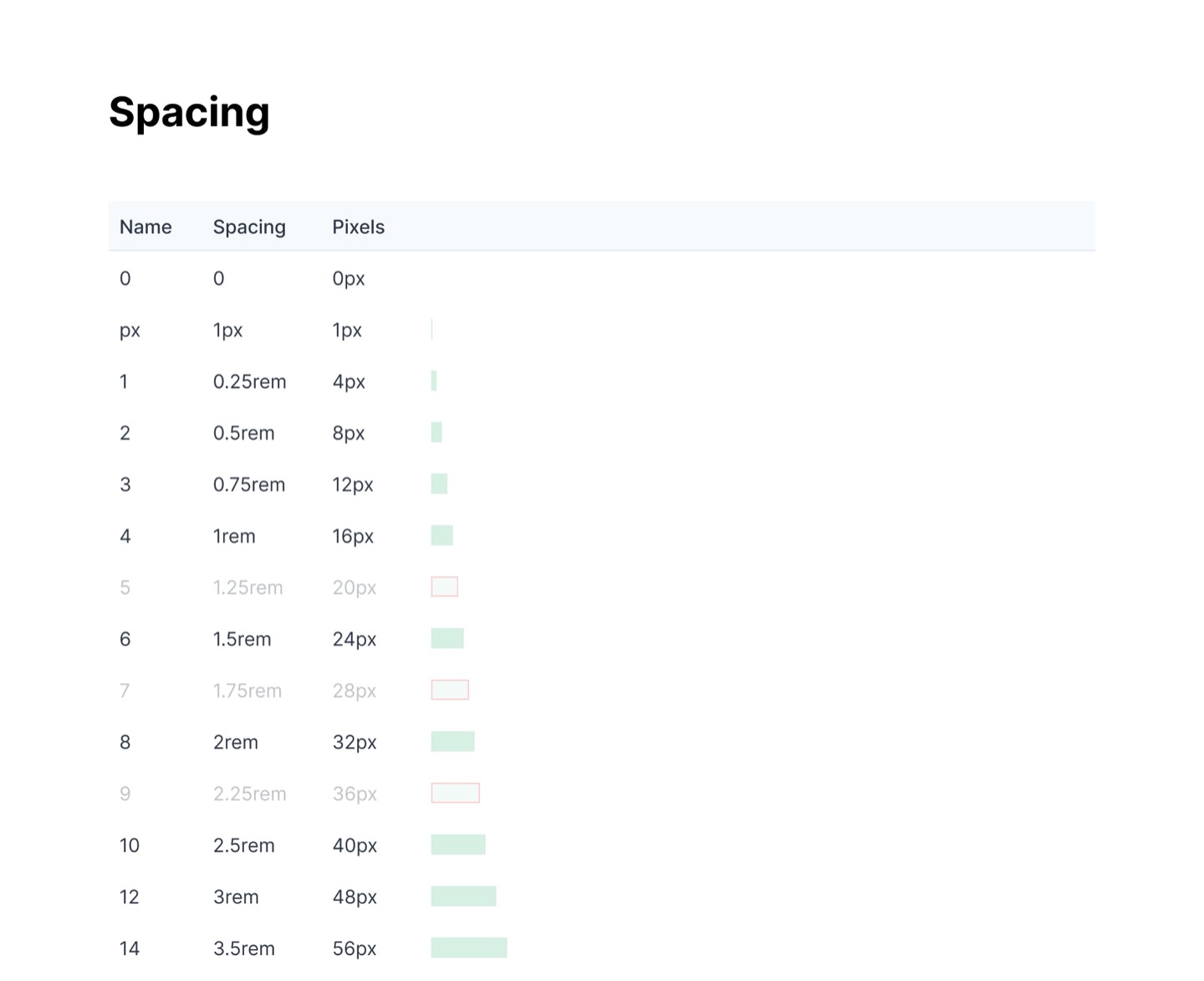
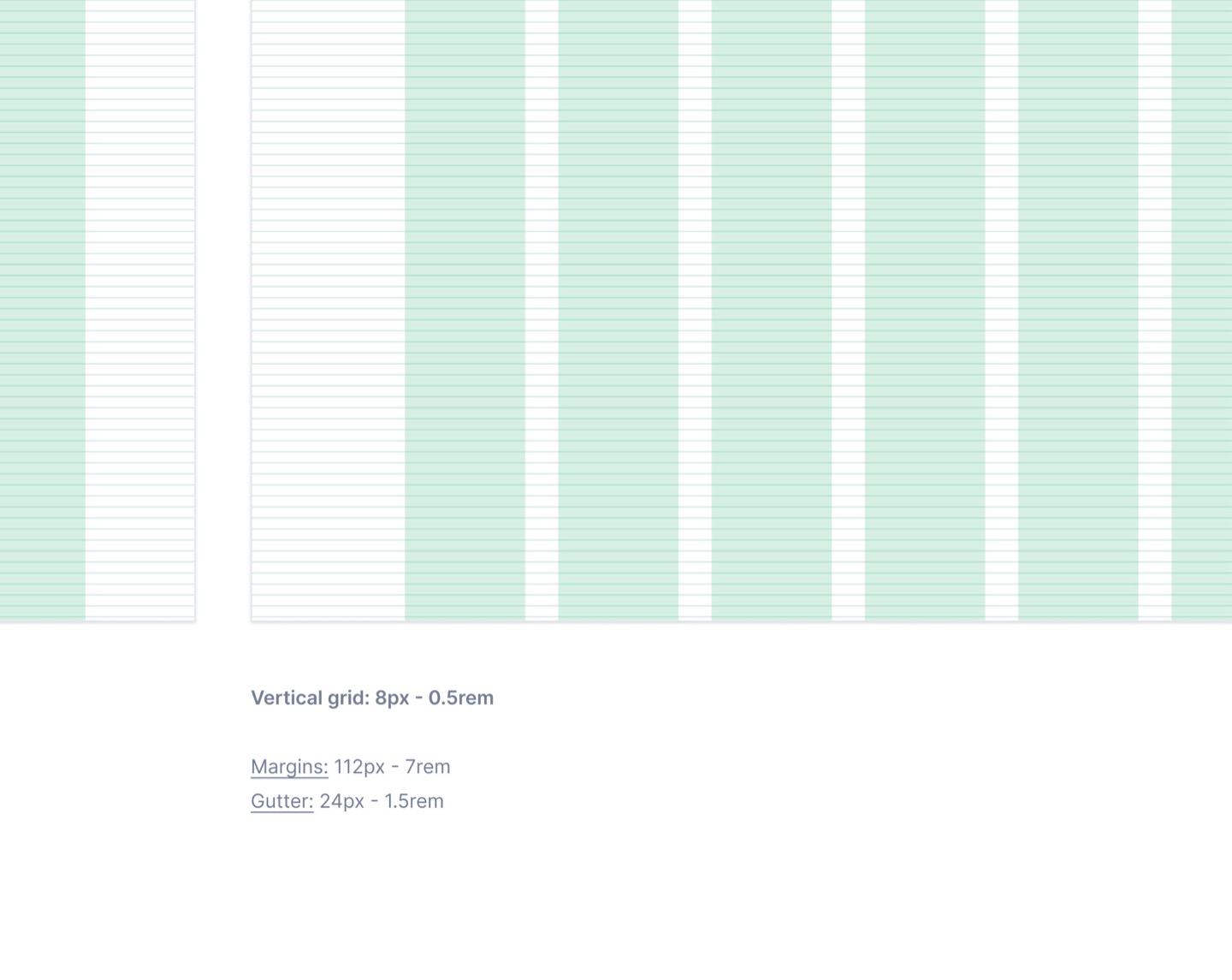
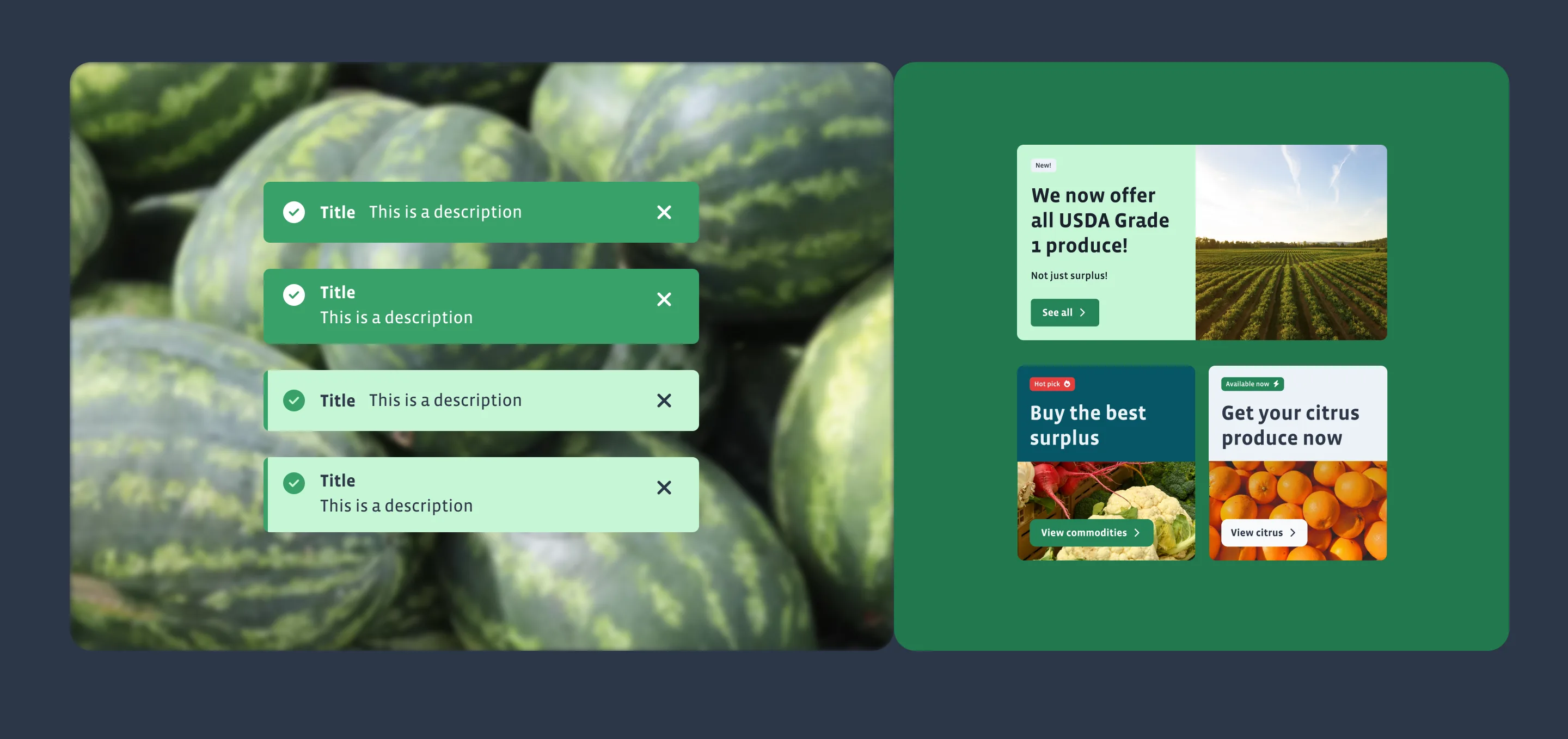
All of this product work was built on Kiwi, a 200+ component design system I created from a full audit of the existing platform. Six principles guided it: accessible (WCAG-compliant from the start), atomic (strict component hierarchy), consistent spacing (soft 8-pt grid), extensive (if you need it, it exists), flexible (adaptable across product areas), and cross-functional (marketing, product, and engineering all work from the same source).
The system wasn’t a separate initiative. It was the foundation that made shipping across three product areas possible without the design fragmenting.
Components and variants in the Kiwi design system
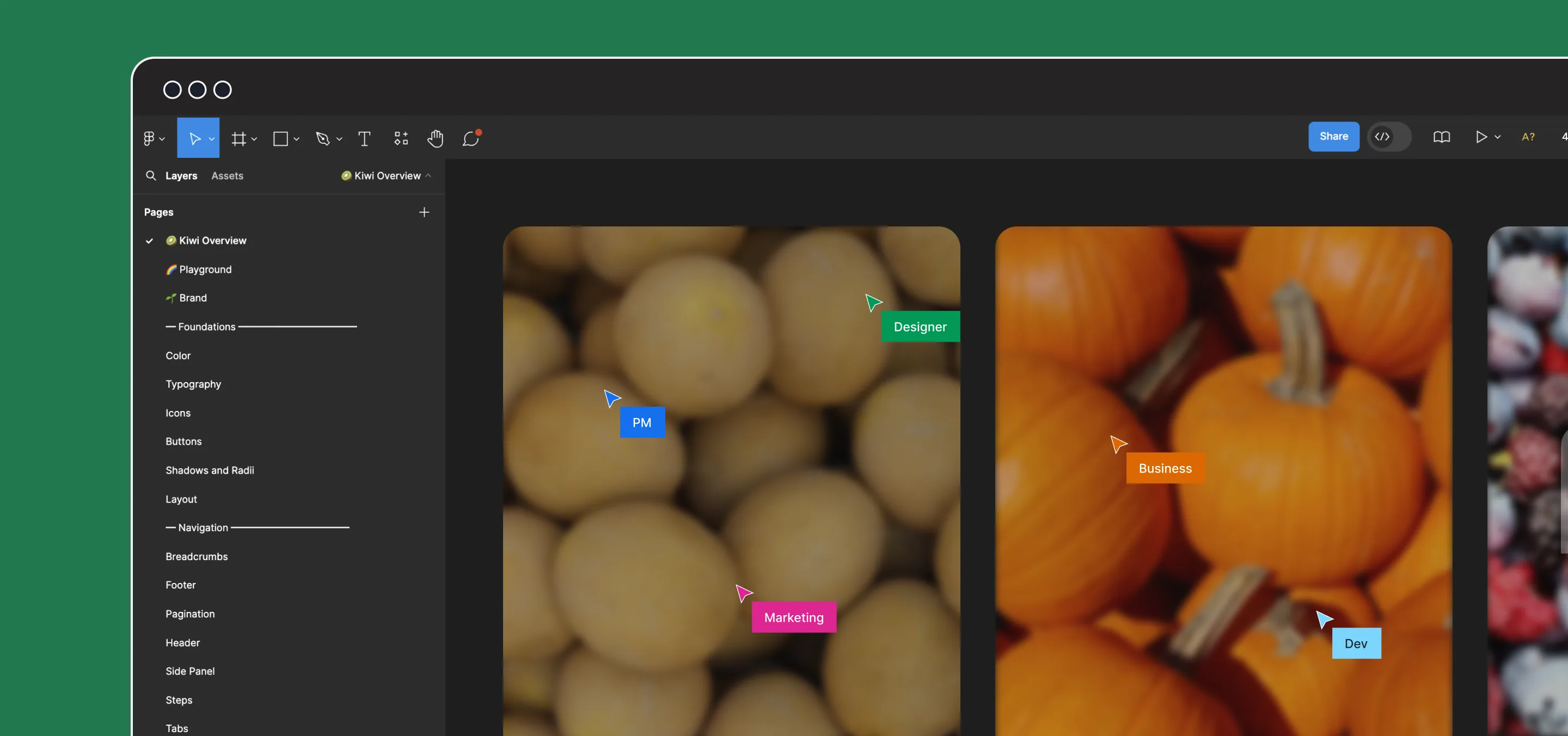
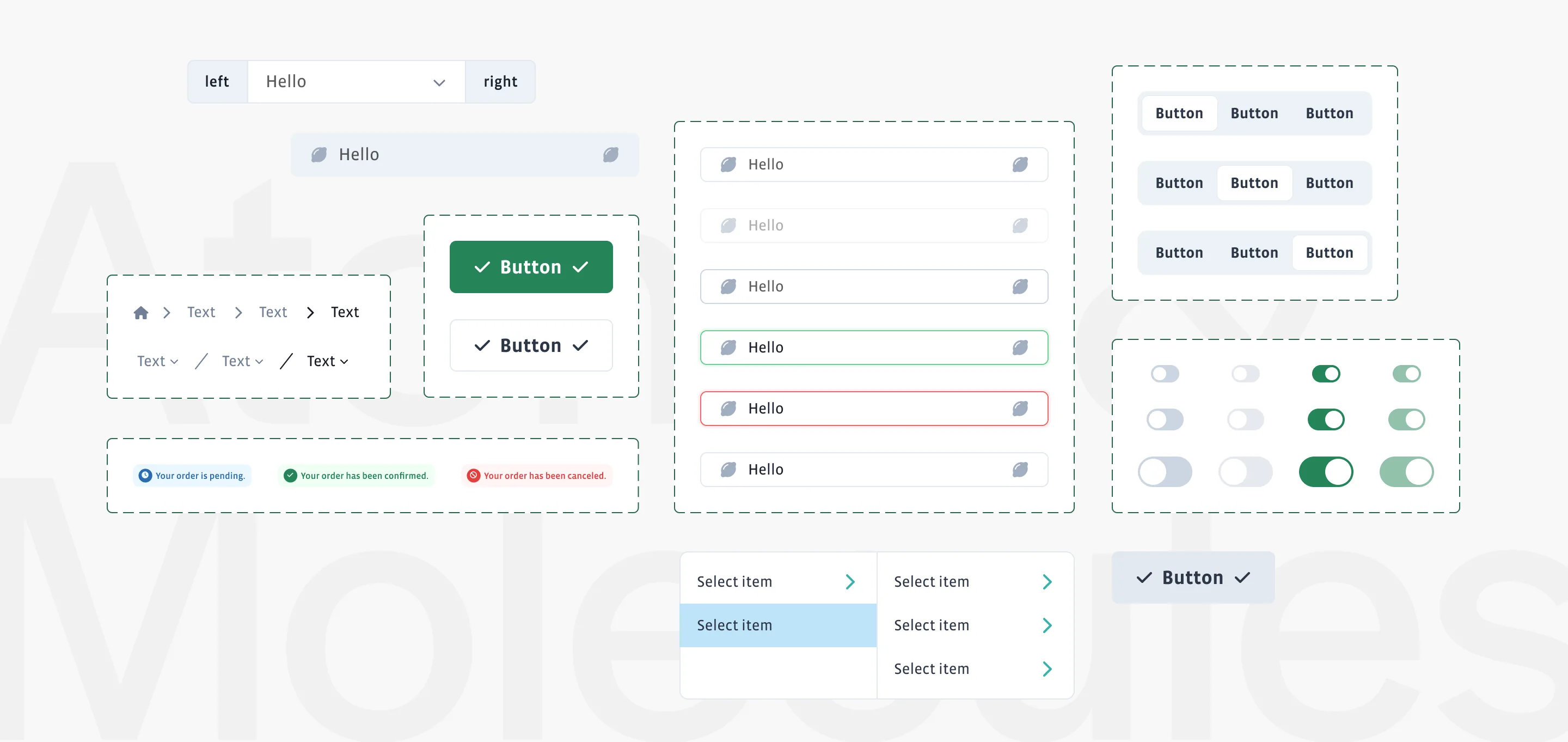

Features shipped in a single year with the Kiwi design system
Outcome
Shipped buyer marketplace, supplier management tools, and an internal sales ERP. The Kiwi design system enabled the product team to ship 30+ features in one year while maintaining consistency across the platform.
The redesigned marketplace, supplier tools, and internal ERP shipped as a connected system. The Kiwi design system enabled the product team to go from struggling with basic UI decisions to shipping 30+ features in a single year with consistent quality. The counteroffer system moved negotiation into the product for the first time. And the sales team finally had tools that matched the complexity of managing a perishable goods marketplace.